
Key Takeaways
- Perimenopause is the body’s “second puberty.” Knowing that this is part of what’s disrupting your metabolism is key to understanding how to live well for the decades to come
- Perimenopause can significantly impact metabolism. There are no quick fixes, but it’s also not in your head.
- It’s possible to holistically manage and even find ways to improve your health in and after your 40s. Reach out to holistic care specialists who can walk with you every step of the way.
Change is inevitable. Ironically, the only thing constant in life is change.
Of course, your 40s aren’t the only time when your body changes. That change happens all the time, and over time. At the cellular level, you will become an entirely different person several times throughout your life.
Some of those changes we can directly control; for example, there is something called “beauty rest,” as getting enough sleep is key to good skin care. There are other ways in which we have less control, and one of the most notorious among those is menopause.
Read: What Small Businesses Often Get Wrong About Digital Advertising
Perimenopause: The “Second Puberty”
Menopause can feel like a very unwelcome reality for most women. Nonetheless, menopause is a fact of life that, with better understanding, comes more empowerment to greet those changes with confidence.
If you are in your 40s, and you’re feeling like your body is changing in especially dramatic, moody, angsty ways, you might be on to something. There is a very real chance that you are experiencing perimenopause, also known as your body’s “second puberty.” Look for signs like:
- Sleep issues
- Mood swings
- Hot flashes and/or night sweats
- Irregular periods
- Dryer, more brittle hair and skin
- Weight changes (more on that in a bit!)
Your body is once again recalibrating. Your hormones are realigning in ways that can feel like a wrench into that well-oiled machine, or as if something that once felt structurally sound is now beginning to crack.
Despite it all, your body isn’t broken. Rather than seeing your body as “breaking” or “broken,” be more gentle on yourself. Your body is doing what it is meant to do: adapt.
Also, remember that this time, you’re not a teenager – what a relief!
Your Mind Might Be Playing Tricks on You
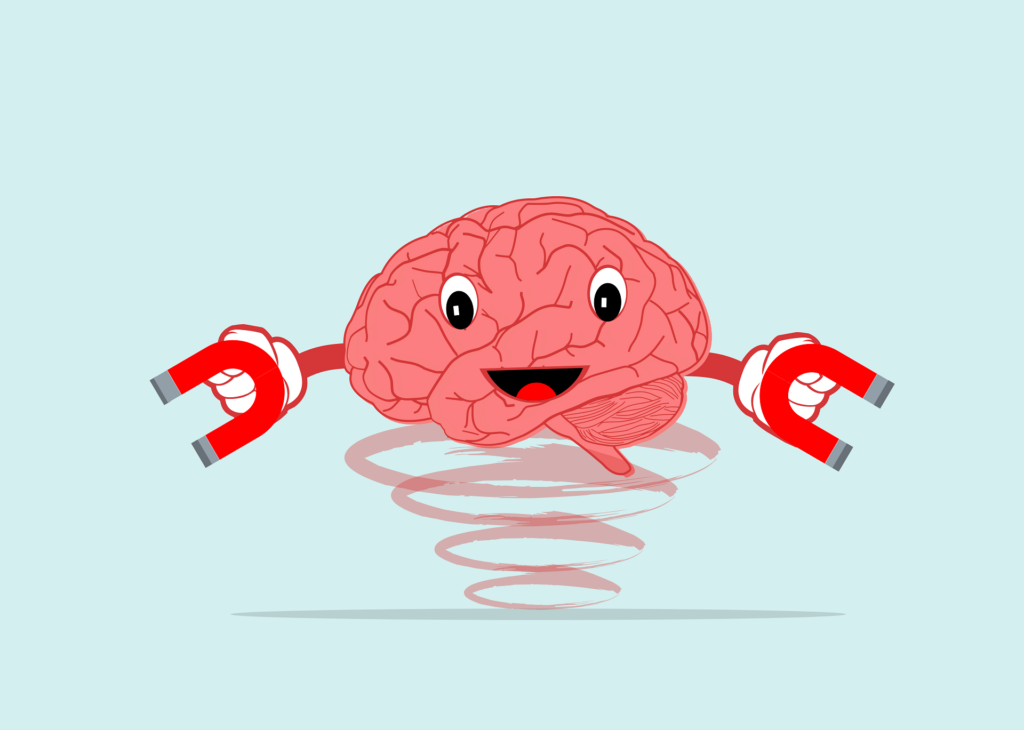
Contrary to far too much bad “advice” in women’s health, no, it’s not “all in your head.” However, that doesn’t mean your mind isn’t prone to playing some tricks on you. Even if your symptoms are real, the mind is notoriously good at creating its own reality.
Perimenopause, Weight Changes, and What’s In Your Head
One of the most significant changes for women experiencing perimenopause and menopause can be the most unsettling: changes in body shape or weight.
Perimenopause directly impacts your weight because it destabilizes your body’s metabolism in incredibly sophisticated ways. To complicate this further, and in tandem with your body’s changing hormones, your brain can feel so powerful that it even defies mathematical logic.
How? Researchers have begun exploring how your brain counts calories. What they found is that your mind’s perception of the number of calories can directly impact how your mind metabolizes them.
It’s (Not Always) a Piece of Cake
Think of the last time you looked at a decadent birthday cake, and either thought to yourself or heard someone remark, “I’d hate to know how many calories are in that!” or “There goes my diet!”
Quite literally, there’s more going on with your brain than meets the eye. Not only do your perceptions shape your feelings of appetite, including your immediate senses of either satiety or “peckishness,” but also how your brain logistically plans its attack.
Teach Your 40+ Year Old Mind Some New Tricks
Even if you didn’t like math in school, your mind is more of a mathematician than previously credited; it may have already counted those “low-calorie” options against you, sending your body into starvation mode. Indeed, it’s not just that those bars or weight loss meals are unsatisfying (almost always, they are!), but because your mind has already determined they are and responded accordingly.
Move Forward with Confidence

The good news is not only that even if you’re feeling a little “off,” what’s happening to you is not “wrong” at all. Even better, the “fix” is definitely not in the form of those miserable, chalky diet shakes marketed mainly to women of perimenopausal and postmenopausal age. You’re free!
Most importantly, it is valuable to seek out long-term, holistic women’s health that meets you where you are at; make sure to do this while checking in with your primary care doctor. In fact, many women express that their post-menopausal lives are their happiest yet, but it doesn’t happen without a mindful approach that accepts and embraces this next step in life. After all, your body isn’t broken; it’s just a little older and wiser.
