
Categories
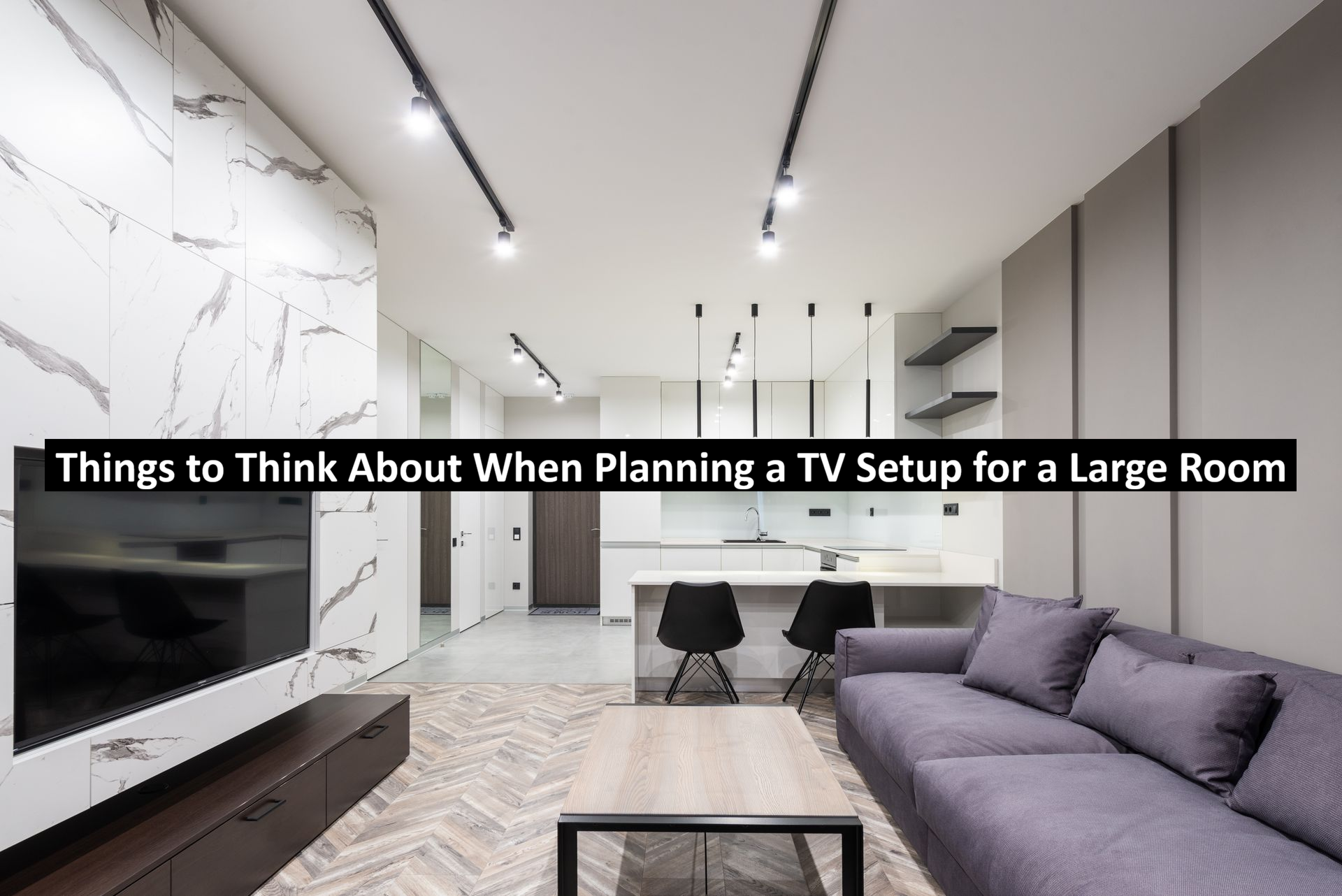
Many buyers are surprised when a television that looks enormous in a showroom turns out to be small once it’s installed in their spacious living room. Issues like these and many others can be solved when you take time to plan before buying.
The goal isn’t simply to fill an empty wall with a big screen. Instead, try to create a setup that makes watching television comfortable from places where people will be seated. Here are some of the things to think about when planning.
“The goal isn’t simply to fill an empty wall with a big screen.”
Before deciding where the television should go, identify the main seating area where people will spend most of their time watching it. Arrange the furniture in such a way that the primary seats have an unobstructed view of the intended screen location.
You should also pay attention to the doorways and routes people use to move around the room because you don’t want people constantly walking between the television and those watching it. If you’ve got an open-plan space, think about creating a dedicated TV viewing area without disrupting the room’s other functions.
Measure the distance between the main seating position and the intended TV location. Guidelines from the Fairfax County, Virginia, government website provide a useful starting point. Divide the distance you’ve just measured (in inches) by 1.5 to estimate the approximate screen size. For example, 7 feet would mean approximately a 56-inch TV, while 9 feet would be a 72-inch TV.
These are general guidelines rather than fixed requirements, and individual viewing preferences may differ.
Also, remember that TV sizes are measured diagonally, not horizontally. Check the actual width and height of the television to ensure it fits within the available wall space.
You should also observe how sunlight moves across the room at different times during the day because large rooms, especially those with expansive windows, can have significant amounts of daylight coming in.
Do not place the screen directly opposite large windows, where reflections can make darker scenes difficult to see. Instead, position it perpendicular to the windows to reduce glare. Think about installing blinds or curtains to control incoming sunlight without making the entire room dark.
For artificial lighting, use shaded or indirect fixtures that illuminate the room without shining directly onto the screen. Avoid placing bright ceiling lights where their reflections will be visible to viewers.
Read: Diamond Tiaras: From Royal Courts to Contemporary Weddings
No one wants to strain their neck doing something that’s supposed to be a relaxing activity. It’s very tempting to mount the television higher than necessary, especially in a large room with high ceilings, but the height of the wall shouldn’t determine the screen’s position.
Sit in your usual viewing position and measure your eye level from the floor. Ideally, the center of the television should be around that height so you can watch without repeatedly tilting your head upwards.
Before drilling, mark the proposed screen dimensions on the wall using painter’s tape and check the viewing position from your sofa.
If mounting the television above eye level is unavoidable, a tilting bracket can improve the viewing angle, although it won’t eliminate the need to look upwards.
“The height of the wall shouldn’t determine the screen’s position.”
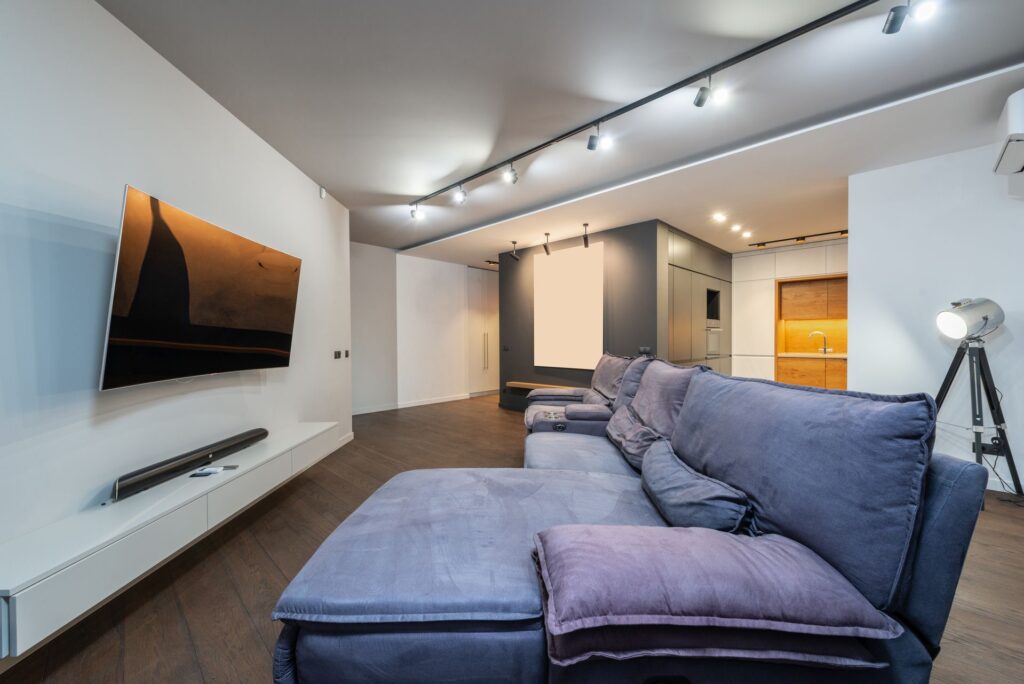
Think about the echoes that can be produced in large rooms with high ceilings as sound bounces off the walls and floors. This can help prevent difficulties understanding what’s being said on TV, even when the TV’s volume is turned up.
If the room has tiled or hardwood floors, consider adding a large area rug to absorb some reflected sound. Curtains and upholstered furniture can also help reduce excessive reverberation. Use acoustic wall panels for rooms with really noticeable echoes.
If you’re planning to install separate speakers, position them around the main viewing area rather than simply increasing the volume to reach people sitting further away.
For large screen sizes, consider choosing a TV with at least 4K resolution rather than a Full HD model. The former provides four times the pixel count of Full HD.
Check the resolution of the content you normally watch. A 4K television cannot produce the full detail of native 4K when the source is only Full HD.
HDR can improve the contrast between bright and dark areas of an image, which can be really helpful when watching movies. However, keep in mind that not every HDR-compatible television delivers the same results.
If possible, compare televisions displaying the same footage using similar picture settings before making your purchase.
When it comes to large rooms, oftentimes you’ll find that people prefer to float their furniture as opposed to placing the sofas against the walls. With such an arrangement, wall outlets may be too far away to conveniently power electrical devices around the seating area. You might think about getting a qualified electrician to install a floor-rated outlet nearby to avoid extension cords crossing walkways.
For wall-mounted televisions, plan outlets behind the screen and near the media cabinet. Powered rear speakers may also need outlets closer to the seating area. You should also consider running HDMI and network cables through accessible in-wall conduits so they can be replaced without opening the walls.
Make sure that the signal cables are appropriately separated from electrical wiring, and ensure bundled cables don’t obstruct ventilation around receivers or other media equipment.
Before purchasing your television or committing to an installation, take some time to assess the room and work out which arrangements will be practical. While it’s nowhere near as complicated as implementing a hospital management system, planning ahead can save you the time and headaches of making adjustments after the TV has been mounted and the wiring concealed.
For more complex setups involving extensive wiring or multiple speakers, consider getting professional assistance. A residential AV install service can help you implement your plans while addressing the technical requirements of your space.
